Leonard Egwuekwe
Menu
Work
About
Contact

Back to Portfolio
Designing for Cognition
Read time: 7 minutes
Project date: 2024 - 2025
Reducing cluttered, complex content and making it digestible
Launched a well-received, accessible catalogue MVP for Parkinson’s UK Tech Guide, integrating login with Clerk and laying the groundwork for future features, all led end-to-end by a solo UX designer. Creating a calmer digital experience for users with varying cognitive needs.
Accessibility
Inclusive Design
DesignOps
TL;DR...a quick snapshot of the project!
Project
Designing the catalogue experience for the Parkinson’s UK Tech Guide, a platform to help people affected by Parkinson’s find helpful technologies.
Goal
Deliver a functional, accessible MVP that allows users to browse, discover and learn about assistive technologies within tight time and technical constraints.
My Role
Responsible for the end-to-end design of the catalogue experience. I defined core user jobs to be done, created low-fidelity wireframes and prototypes, ran ideation workshops and captured personas to guide design decisions. I worked closely with developers and stakeholders to iterate on features, facilitated feedback sessions and led the integration of Clerk for user login and profile creation. I also tracked post-launch user behaviour using Pendo Analytics to inform future improvements.
Challenges
- Balancing accessibility with clarity and simplicity
- Collaborating with our Content Lead and external developers
- Prioritising features for an MVP
- Designing for multiple user groups (people with Parkinson’s, carers, clinicians etc.)
- No formal usability testing due to time constraints
Outcomes
- Successfully launched MVP in Nov 2024
- Delivering a usable and accessible catalogue experience that allows users to explore assistive technology by category or tags
- Integrated Clerk to support secure sign-up and login and ensured a solid baseline experience through close collaboration with stakeholders, including healthcare professionals, people with Parkinson’s and internal teams
Impact
Feedback from stakeholders and users has been consistently positive, validating the decision to focus on clarity and simplicity. Pendo Analytics showed high engagement with key content areas, indicating that the platform is meeting core user needs. The project laid a strong foundation for future iterations, including personalised toolkits, deeper filtering and richer product information, all grounded in real user behaviour and research.
Context
The Tech Guide is a resource aimed at helping people with Parkinson’s, carers, healthcare professionals and the wider Parkinson’s community, discover and evaluate assistive technologies that can improve quality of life. Parkinson’s UK sought to develop a searchable, browsable catalogue of tech solutions that balanced clarity with accessibility, serving people of varied digital confidence, including older adults and those living with motor or cognitive symptoms.
Having started in January 2024, we launched the MVP in November 2024 and have since received encouraging feedback from users and partner organisations.
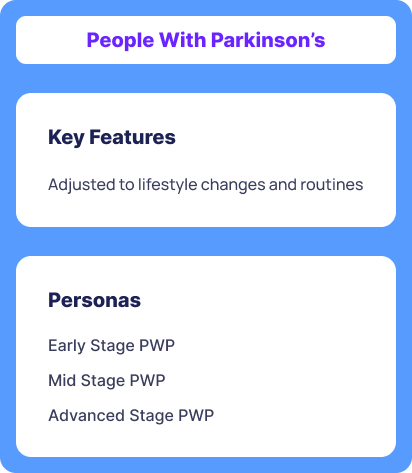
Figure 1. People with Parkinson’s Archetype
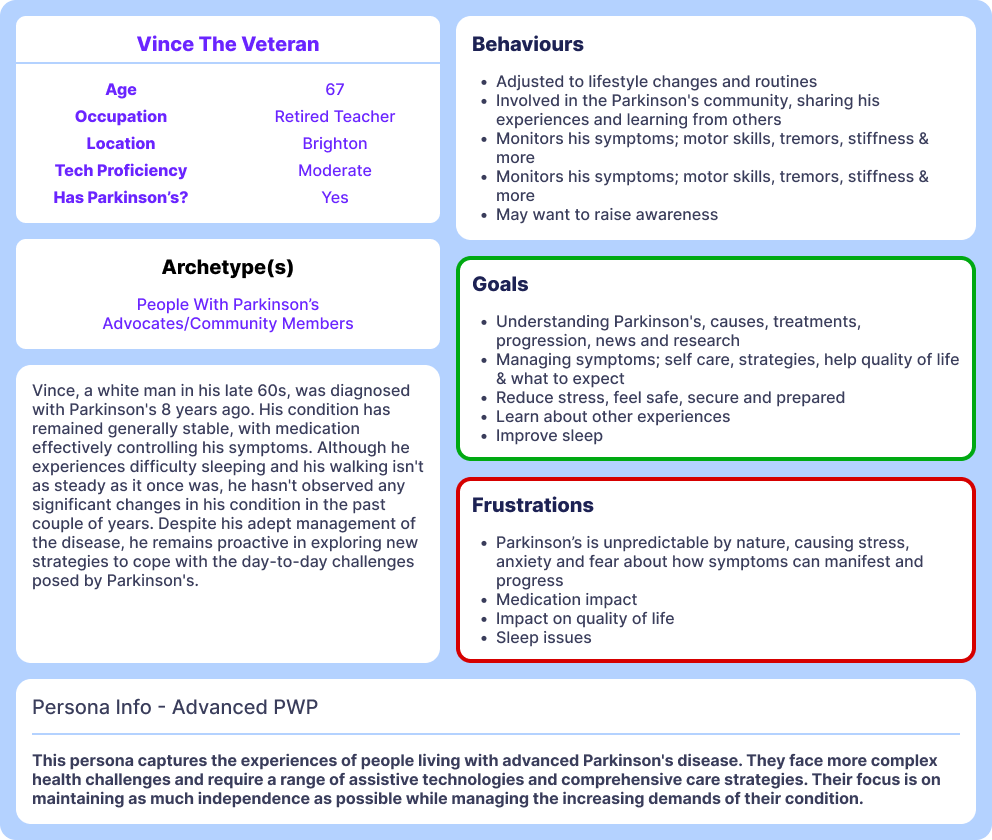
Figure 2. Advanced Person with Parkinson’s Persona
Problem
Our challenge was to build a functional MVP that:
- Clearly showcased the technologies available
- Was accessible to people with Parkinson’s
- Could scale with future content and features
- Worked within technical and resource constraints
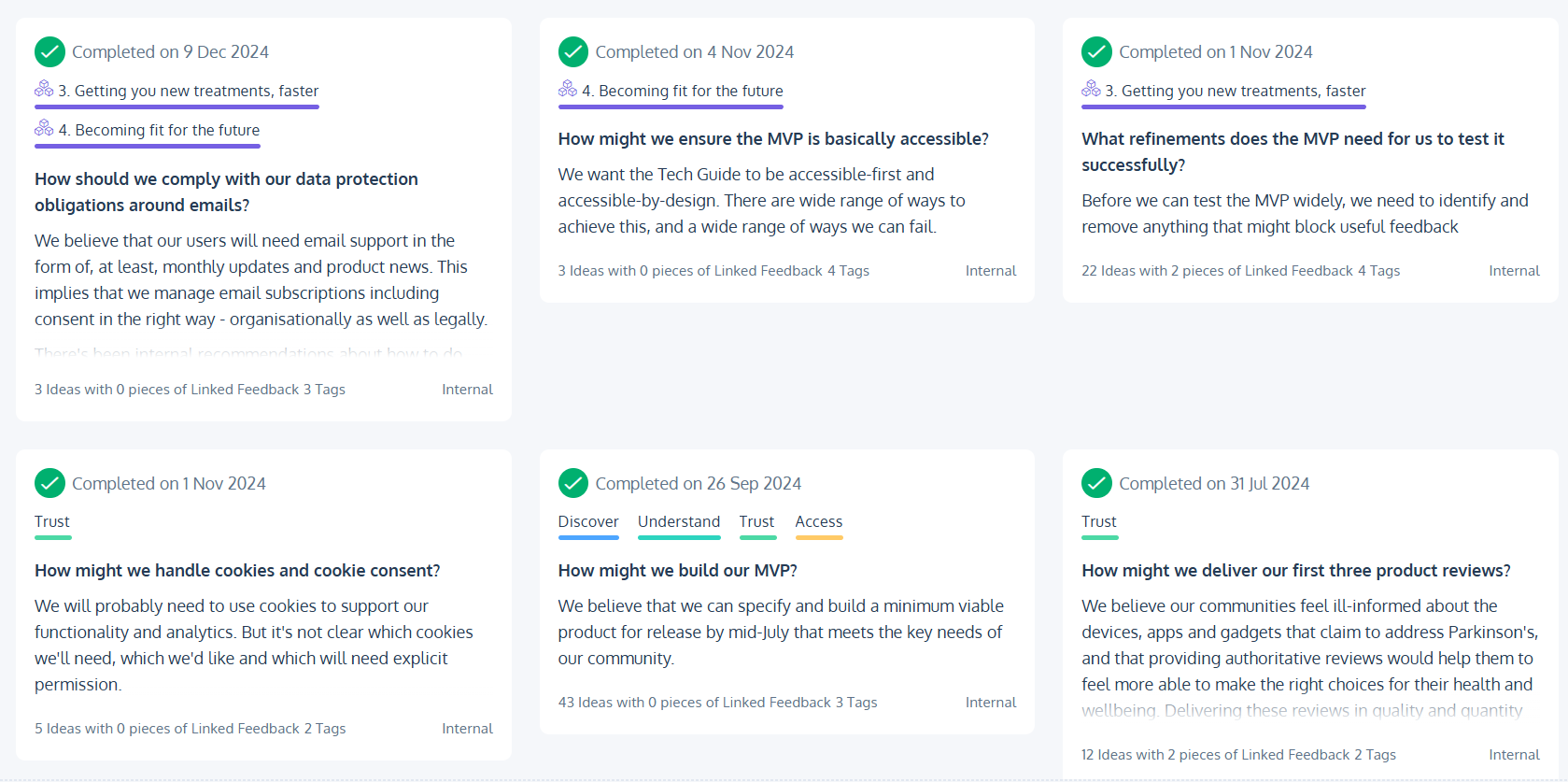
Figure 3. Some completed ‘How might we...’ sections
The project needed to support multiple user groups (patients, professionals, researchers) and meet internal deadlines. There was also pressure to deliver something that “just worked” first, even if not everything made it into the first release.
The “How might we...” exercise was conducted to aid idea generation; for examples, see Figure 3.
My Role
As the Lead/Sole UX/UI designer on the Tech Guide, I led the end-to-end experience.
My responsibilities included:
- Defining key user jobs to be done
- Developing a research study plan (to facilitate future testing)
- Leading ideation workshops (e.g., “How Might We”)
- Capturing personas and archetypes based on research, inference, user stories and stakeholder input
- Creating low-fidelity wireframes and prototypes
- Facilitating stakeholder reviews and sign-off sessions
- Collaborating with developers to align on scope and feasibility
- Exploring external services (e.g., Clerk for user access)
- Making tough calls on what to include or exclude from the MVP
Process
Discovery, Definition & Planning
Following the Double Diamond methodology, we started with collaborative ideation and scope mapping. Through stakeholder interviews and early exploratory work, I defined key Jobs to Be Done, such as:
- “I want to find tech that helps with my tremor”
- “I want to recommend products to patients that I trust”
- “I want to learn what others with Parkinson’s are using”
I created initial personas and archetypes to guide empathy in design, ranging from tech-savvy carers to older adults who may be hesitant online. To lay the groundwork for feature prioritisation, I documented key behaviours and desired outcomes of the product.
Prototyping & Iteration
I created low-fidelity wireframes to explore layouts, card types, filters and navigation. These went through several rounds of iteration, with feedback from:
- People with Parkinson’s
- Occupational therapists and clinicians
- Researchers and the wider Parkinson’s community
We deliberately removed or postponed complex features like product comparison, or ratings, in favour of delivering a clear and usable MVP.
MVP Focus
We landed on a simple, accessible layout that:
- Presents technologies as individual cards for quick scanning
- Allows browsing by categories or tags, making it easier to explore what's relevant
- Focuses on clarity, readability and minimal interactions, especially for users with motor or cognitive impairments
To support future personalisation and content saving, we integrated Clerk for secure profile creation and user login, laying the groundwork for more tailored experiences later on (e.g. saving tools, submitting feedback, or building a toolkit).
While other complex features were deferred, this login functionality was seen as essential for scaling and future growth.
Stakeholder Collaboration
Throughout the process, we ran frequent feedback sessions. These sessions served as substitutes for formal usability testing and helped validate decisions quickly.
Stakeholders and our Tech Guide team helped with:
- Content tone and structure
- Feature sign-off
- Confirming accessibility expectations
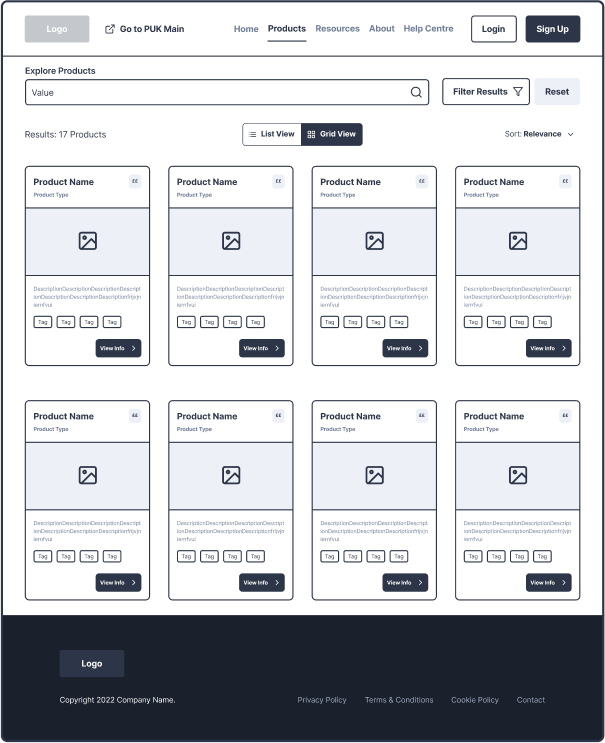
Figure 4. Low fidelity design for catalogue
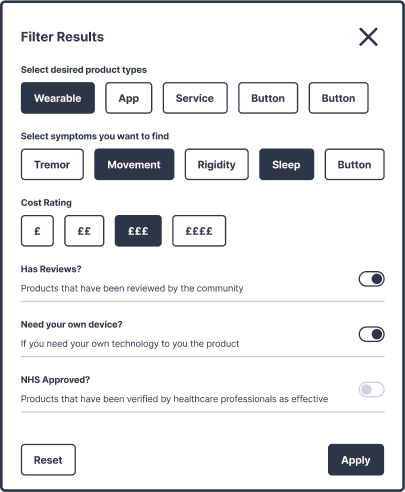
Figure 5. Low fidelity design for filters
Outcomes
MVP Launched
- Launched November 2024
- The catalogue launched on time and has received strong anecdotal feedback from Parkinson’s UK users and partner organisations. Even getting reach from the Michael J Fox Foundation
Early User Behaviour (via Pendo Analytics)
- High engagement with category pages and product cards
- Repeated user visits suggest value and return interest
- Most-used features: browsing by category, reading product summaries
- Least-used features: deep dives or external redirects (highlighting future improvement areas)
Future-Friendly Design
- MVP serves as a functional baseline with space to add a variety of features, such as tagging and product comparison
Testimonials
A person living with Parkinson’s has said:
“It’s so helpful to see everything in one place, I didn’t know half of these tools existed!”
A Occupational Therapist has said:
“This is exactly the kind of resource I need to share with my patients. Simple, clear and trustworthy”
An internal stakeholder has said:
“Great work launching something usable and focused. The MVP is already making an impact.”
Reflections
This was a powerful exercise in strategic UX design. With limited resources and high impact expectations, I learned to:
- Design for the now, plan for the future: Avoid perfectionism in MVPs, focus on core value delivery first
- Use co-design as a proxy for testing: Regular feedback loops with stakeholders made up for the lack of formal usability studies
- Document with purpose: Capturing personas, jobs to be done and user goals early on helped steer clear, confident decisions
- Let data tell a story: Pendo metrics gave visibility into how the guide is used, and where we can improve next
This work gave me a deeper appreciation for balancing research, design, tech and real-world constraints and reinforced the value of shipping, learning and evolving iteratively.
Let’s connect and work together!


Back to Portfolio
Designing for Cognition
Read time: 7 minutes
Project date: 2024 - 2025
Reducing cluttered, complex content and making it digestible
Launched a well-received, accessible catalogue MVP for Parkinson’s UK Tech Guide, integrating login with Clerk and laying the groundwork for future features, all led end-to-end by a solo UX designer. Creating a calmer digital experience for users with varying cognitive needs.
Accessibility
Inclusive Design
DesignOps
TL;DR...a quick snapshot of the project!
Project
Designing the catalogue experience for the Parkinson’s UK Tech Guide, a platform to help people affected by Parkinson’s find helpful technologies.
Goal
Deliver a functional, accessible MVP that allows users to browse, discover and learn about assistive technologies within tight time and technical constraints.
My Role
Responsible for the end-to-end design of the catalogue experience. I defined core user jobs to be done, created low-fidelity wireframes and prototypes, ran ideation workshops and captured personas to guide design decisions. I worked closely with developers and stakeholders to iterate on features, facilitated feedback sessions and led the integration of Clerk for user login and profile creation. I also tracked post-launch user behaviour using Pendo Analytics to inform future improvements.
Challenges
- Balancing accessibility with clarity and simplicity
- Collaborating with our Content Lead and external developers
- Prioritising features for an MVP
- Designing for multiple user groups (people with Parkinson’s, carers, clinicians etc.)
- No formal usability testing due to time constraints
Outcomes
- Successfully launched MVP in Nov 2024
- Delivering a usable and accessible catalogue experience that allows users to explore assistive technology by category or tags
- Integrated Clerk to support secure sign-up and login and ensured a solid baseline experience through close collaboration with stakeholders, including healthcare professionals, people with Parkinson’s and internal teams
Impact
Feedback from stakeholders and users has been consistently positive, validating the decision to focus on clarity and simplicity. Pendo Analytics showed high engagement with key content areas, indicating that the platform is meeting core user needs. The project laid a strong foundation for future iterations, including personalised toolkits, deeper filtering and richer product information, all grounded in real user behaviour and research.
Context
The Tech Guide is a resource aimed at helping people with Parkinson’s, carers, healthcare professionals and the wider Parkinson’s community, discover and evaluate assistive technologies that can improve quality of life. Parkinson’s UK sought to develop a searchable, browsable catalogue of tech solutions that balanced clarity with accessibility, serving people of varied digital confidence, including older adults and those living with motor or cognitive symptoms.
Having started in January 2024, we launched the MVP in November 2024 and have since received encouraging feedback from users and partner organisations.
Figure 1. People with Parkinson’s Archetype
Figure 2. Advanced Person with Parkinson’s Persona
Problem
Our challenge was to build a functional MVP that:
- Clearly showcased the technologies available
- Was accessible to people with Parkinson’s
- Could scale with future content and features
- Worked within technical and resource constraints
The project needed to support multiple user groups (patients, professionals, researchers) and meet internal deadlines. There was also pressure to deliver something that “just worked” first, even if not everything made it into the first release.
The “How might we...” exercise was conducted to aid idea generation; for examples, see Figure 3.
Figure 3. Some completed ‘How might we...’ sections
My Role
As the Lead/Sole UX/UI designer on the Tech Guide, I led the end-to-end experience.
My responsibilities included:
- Defining key user jobs to be done
- Developing a research study plan (to facilitate future testing)
- Leading ideation workshops (e.g., “How Might We”)
- Capturing personas and archetypes based on research, inference, user stories and stakeholder input
- Creating low-fidelity wireframes and prototypes
- Facilitating stakeholder reviews and sign-off sessions
- Collaborating with developers to align on scope and feasibility
- Exploring external services (e.g., Clerk for user access)
- Making tough calls on what to include or exclude from the MVP
Process
Discovery, Definition & Planning
Following the Double Diamond methodology, we started with collaborative ideation and scope mapping. Through stakeholder interviews and early exploratory work, I defined key Jobs to Be Done, such as:
- “I want to find tech that helps with my tremor”
- “I want to recommend products to patients that I trust”
- “I want to learn what others with Parkinson’s are using”
I created initial personas and archetypes to guide empathy in design, ranging from tech-savvy carers to older adults who may be hesitant online. To lay the groundwork for feature prioritisation, I documented key behaviours and desired outcomes of the product.
Prototyping & Iteration
I created low-fidelity wireframes to explore layouts, card types, filters and navigation. These went through several rounds of iteration, with feedback from:
- People with Parkinson’s
- Occupational therapists and clinicians
- Researchers and the wider Parkinson’s community
We deliberately removed or postponed complex features like product comparison, or ratings, in favour of delivering a clear and usable MVP.
MVP Focus
We landed on a simple, accessible layout that:
- Presents technologies as individual cards for quick scanning
- Allows browsing by categories or tags, making it easier to explore what's relevant
- Focuses on clarity, readability and minimal interactions, especially for users with motor or cognitive impairments
To support future personalisation and content saving, we integrated Clerk for secure profile creation and user login, laying the groundwork for more tailored experiences later on (e.g. saving tools, submitting feedback, or building a toolkit).
While other complex features were deferred, this login functionality was seen as essential for scaling and future growth.
Stakeholder Collaboration
Throughout the process, we ran frequent feedback sessions. These sessions served as substitutes for formal usability testing and helped validate decisions quickly.
Stakeholders and our Tech Guide team helped with:
- Content tone and structure
- Feature sign-off
- Confirming accessibility expectations
Figure 4. Low fidelity design for catalogue
Figure 5. Low fidelity design for filters
Outcomes
MVP Launched
- Launched November 2024
- The catalogue launched on time and has received strong anecdotal feedback from Parkinson’s UK users and partner organisations. Even getting reach from the Michael J Fox Foundation
Early User Behaviour (via Pendo Analytics)
- High engagement with category pages and product cards
- Repeated user visits suggest value and return interest
- Most-used features: browsing by category, reading product summaries
- Least-used features: deep dives or external redirects (highlighting future improvement areas)
Future-Friendly Design
- MVP serves as a functional baseline with space to add a variety of features, such as tagging and product comparison
Testimonials
A person living with Parkinson’s has said:
“It’s so helpful to see everything in one place, I didn’t know half of these tools existed!”
A Occupational Therapist has said:
“This is exactly the kind of resource I need to share with my patients. Simple, clear and trustworthy”
An internal stakeholder has said:
“Great work launching something usable and focused. The MVP is already making an impact.”
Reflections
This was a powerful exercise in strategic UX design. With limited resources and high impact expectations, I learned to:
- Design for the now, plan for the future: Avoid perfectionism in MVPs, focus on core value delivery first
- Use co-design as a proxy for testing: Regular feedback loops with stakeholders made up for the lack of formal usability studies
- Document with purpose: Capturing personas, jobs to be done and user goals early on helped steer clear, confident decisions
- Let data tell a story: Pendo metrics gave visibility into how the guide is used, and where we can improve next
This work gave me a deeper appreciation for balancing research, design, tech and real-world constraints and reinforced the value of shipping, learning and evolving iteratively.
Let’s connect and work together!
Back to Portfolio
Designing for Cognition
Read time: 7 minutes
Project date: 2024 - 2025
Reducing cluttered, complex content and making it digestible
Launched a well-received, accessible catalogue MVP for Parkinson’s UK Tech Guide, integrating login with Clerk and laying the groundwork for future features, all led end-to-end by a solo UX designer. Creating a calmer digital experience for users with varying cognitive needs.
Accessibility
Inclusive Design
DesignOps
TL;DR...a quick snapshot of the project!
Project
Designing the catalogue experience for the Parkinson’s UK Tech Guide, a platform to help people affected by Parkinson’s find helpful technologies.
Goal
Deliver a functional, accessible MVP that allows users to browse, discover and learn about assistive technologies within tight time and technical constraints.
My Role
Responsible for the end-to-end design of the catalogue experience. I defined core user jobs to be done, created low-fidelity wireframes and prototypes, ran ideation workshops and captured personas to guide design decisions. I worked closely with developers and stakeholders to iterate on features, facilitated feedback sessions and led the integration of Clerk for user login and profile creation. I also tracked post-launch user behaviour using Pendo Analytics to inform future improvements.
Challenges
- Balancing accessibility with clarity and simplicity
- Collaborating with our Content Lead and external developers
- Prioritising features for an MVP
- Designing for multiple user groups (people with Parkinson’s, carers, clinicians etc.)
- No formal usability testing due to time constraints
Outcomes
- Successfully launched MVP in Nov 2024
- Delivering a usable and accessible catalogue experience that allows users to explore assistive technology by category or tags
- Integrated Clerk to support secure sign-up and login and ensured a solid baseline experience through close collaboration with stakeholders, including healthcare professionals, people with Parkinson’s and internal teams
Impact
Feedback from stakeholders and users has been consistently positive, validating the decision to focus on clarity and simplicity. Pendo Analytics showed high engagement with key content areas, indicating that the platform is meeting core user needs. The project laid a strong foundation for future iterations, including personalised toolkits, deeper filtering and richer product information, all grounded in real user behaviour and research.
Context
The Tech Guide is a resource aimed at helping people with Parkinson’s, carers, healthcare professionals and the wider Parkinson’s community, discover and evaluate assistive technologies that can improve quality of life. Parkinson’s UK sought to develop a searchable, browsable catalogue of tech solutions that balanced clarity with accessibility, serving people of varied digital confidence, including older adults and those living with motor or cognitive symptoms.
Having started in January 2024, we launched the MVP in November 2024 and have since received encouraging feedback from users and partner organisations.
Figure 1. People with Parkinson’s Archetype
Figure 2. Advanced Person with Parkinson’s Persona
Problem
Our challenge was to build a functional MVP that:
- Clearly showcased the technologies available
- Was accessible to people with Parkinson’s
- Could scale with future content and features
- Worked within technical and resource constraints
The project needed to support multiple user groups (patients, professionals, researchers) and meet internal deadlines. There was also pressure to deliver something that “just worked” first, even if not everything made it into the first release.
The “How might we...” exercise was conducted to aid idea generation; for examples, see Figure 3.
Figure 3. Some completed ‘How might we...’ sections
My Role
As the Lead/Sole UX/UI designer on the Tech Guide, I led the end-to-end experience.
My responsibilities included:
- Defining key user jobs to be done
- Developing a research study plan (to facilitate future testing)
- Leading ideation workshops (e.g., “How Might We”)
- Capturing personas and archetypes based on research, inference, user stories and stakeholder input
- Creating low-fidelity wireframes and prototypes
- Facilitating stakeholder reviews and sign-off sessions
- Collaborating with developers to align on scope and feasibility
- Exploring external services (e.g., Clerk for user access)
- Making tough calls on what to include or exclude from the MVP
Process
Discovery, Definition & Planning
Following the Double Diamond methodology, we started with collaborative ideation and scope mapping. Through stakeholder interviews and early exploratory work, I defined key Jobs to Be Done, such as:
- “I want to find tech that helps with my tremor”
- “I want to recommend products to patients that I trust”
- “I want to learn what others with Parkinson’s are using”
I created initial personas and archetypes to guide empathy in design, ranging from tech-savvy carers to older adults who may be hesitant online. To lay the groundwork for feature prioritisation, I documented key behaviours and desired outcomes of the product.
Prototyping & Iteration
I created low-fidelity wireframes to explore layouts, card types, filters and navigation. These went through several rounds of iteration, with feedback from:
- People with Parkinson’s
- Occupational therapists and clinicians
- Researchers and the wider Parkinson’s community
We deliberately removed or postponed complex features like product comparison, or ratings, in favour of delivering a clear and usable MVP.
MVP Focus
We landed on a simple, accessible layout that:
- Presents technologies as individual cards for quick scanning
- Allows browsing by categories or tags, making it easier to explore what's relevant
- Focuses on clarity, readability and minimal interactions, especially for users with motor or cognitive impairments
To support future personalisation and content saving, we integrated Clerk for secure profile creation and user login, laying the groundwork for more tailored experiences later on (e.g. saving tools, submitting feedback, or building a toolkit).
While other complex features were deferred, this login functionality was seen as essential for scaling and future growth.
Stakeholder Collaboration
Throughout the process, we ran frequent feedback sessions. These sessions served as substitutes for formal usability testing and helped validate decisions quickly.
Stakeholders and our Tech Guide team helped with:
- Content tone and structure
- Feature sign-off
- Confirming accessibility expectations
Figure 4. Low fidelity design for catalogue
Figure 5. Low fidelity design for filters
Outcomes
MVP Launched
- Launched November 2024
- The catalogue launched on time and has received strong anecdotal feedback from Parkinson’s UK users and partner organisations. Even getting reach from the Michael J Fox Foundation
Early User Behaviour (via Pendo Analytics)
- High engagement with category pages and product cards
- Repeated user visits suggest value and return interest
- Most-used features: browsing by category, reading product summaries
- Least-used features: deep dives or external redirects (highlighting future improvement areas)
Future-Friendly Design
- MVP serves as a functional baseline with space to add a variety of features, such as tagging and product comparison
Testimonials
A person living with Parkinson’s has said:
“It’s so helpful to see everything in one place, I didn’t know half of these tools existed!”
A Occupational Therapist has said:
“This is exactly the kind of resource I need to share with my patients. Simple, clear and trustworthy”
An internal stakeholder has said:
“Great work launching something usable and focused. The MVP is already making an impact.”
Reflections
This was a powerful exercise in strategic UX design. With limited resources and high impact expectations, I learned to:
- Design for the now, plan for the future: Avoid perfectionism in MVPs, focus on core value delivery first
- Use co-design as a proxy for testing: Regular feedback loops with stakeholders made up for the lack of formal usability studies
- Document with purpose: Capturing personas, jobs to be done and user goals early on helped steer clear, confident decisions
- Let data tell a story: Pendo metrics gave visibility into how the guide is used, and where we can improve next
This work gave me a deeper appreciation for balancing research, design, tech and real-world constraints and reinforced the value of shipping, learning and evolving iteratively.
Let’s connect and work together!